Vin Crosbie's Personal Blog

For his business blog, visit http://www.digitaldeliverance.com

Underuse > Use of This Website: Part 2

What I hadn’t anticipated in May when I wrote the previous post was the legal, financial, logistic, and otherwise bureaucratic time consumption of something I’d meanwhile been arranging: I am now a legal resident of Spain. Since that posting May, I’ve obtained a Spanish residency visa and European work permit, both good through this decade. I’ve retained my U.S. citizenship, but am eligible for Spanish citizenship (dual citizenship) also in 12 months. I haven’t decided about that; it hasn’t been my aim. Time and residency will tell. Although I’ve recently sold my family’s newspaper business in Connecticut, my home in that state’s city of Stamford, my family’s beach house on the Connecticut shore, and the only assets that I now own in the U.S. are my eight-year-old car, my bank and investment accounts, and my 30-year-old consulting company, I’ve retain a long-term lease on a condominium, owned by South African friends, in the western Connecticut hills 80 miles (130 km) north of New York City. Forty years ago, while working in New York City as an employee of international companies, I had wanted to work abroad instead. However, most of the folks whom I knew working abroad for those companies wanted to work New York City instead. Although some of those friends suggested that we switch locations, the fact that wanted to work in New York City instead, plus that I was then married to someone with a job in nearby Connecticut, led me to keep working from New York City. When I started my own company 30 years ago, whose purpose was to consult about New Media to media companies in the United States, it rapidly became apparent to me that there is even more aggregate demand abroad for such consulting. In 1997, I began consulting to European media companies and by 2000 had clients from five continents. I’ve co-chaired and co-moderated the WAN/Ifra ‘Beyond the Printed Word’ newspaper conference in Vienna; given Singapore’s annual media lecture (introduced by the audience in its National Library by the President of that Republic), and the initial edition of the now 15-year-old International Journal of New Media Studies, which is based in Asia, lead with my seminal essay, What is New Media. Although also while consulting had been teaching in Syracuse University’s graduate school between 2007 and 2021, I’ve done so much consulting abroad that, except for some for the U.S. Congress, […]
My Family Ending 140 Years as Daily Newspaper Publishers

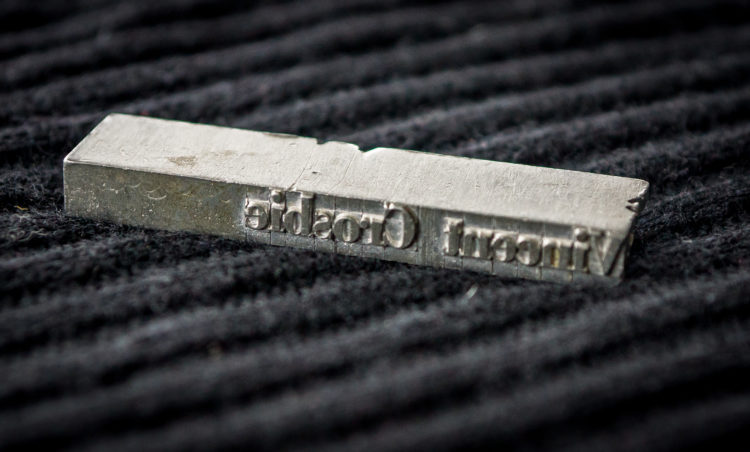
  With nostalgia and some sadness, my family today announced that after 140 years, it’s leaving the newspaper business on May 1st. The daily Chronicle of Willimantic, Connecticut, founded by my step-great-great-grandfather John A. MacDonald in 1877, will be sold at the end of next month to Central Connecticut Communications, the owners of the New Britain Herald and the Bristol Press, two other Connecticut dailies. Following John MacDonald, my great-grandfather George Augustus Bartlett, grandfather G. Donald Bartlett, mother Lucy Bartlett Crosbie, brother Kevin Bartlett Crosbie, and my sister-in-law Patrice Pernaselli Crosbie have in turn, generally after the death of their predecessor, published the paper every day since that week when John founded it — during which Queen Victoria was proclaimed Empress of India, Chief Crazy Horse was fighting the U.S. cavalry, and President Ulysses Grant was ordering home the last federal troops occupying the former Confederate states. We have been the oldest newspaper family in New England. My father Arthur W. Crosbie was the newspaper’s general manager during the middle of the 20th Century. I worked there during the 1970’s, and had grown up in a multi-generational household where the news business and substance of newspaper editorials were dinner table conversation. When I started in the business, we still melted lead to make that day’s printing type (a slug of which, pictured above, I’ve kept from those days) and the newspaper received international and national news via rolls of one-inch (2.5 cm) wide paper tape punched in teletype code. Fire and police radio monitors sat besides our TV. The daily deadlines made it both a satisfying and frustrating occupation. One hard to let go. Yet Facebook friends who have known me as a news industry futurists/consultant from 1996 onward (and as well since 2008 as Syracuse University’s postgraduate instructor in the New Media Business) will know from my professional and trade journal writings and speeches during the past 15 years that newspaper publishing, with quite rare exceptions, is now an unsustainable business due to epochal changes in how and why people consume news, entertainment, and other information. Times change. Business life cycles end. And we’re closing our 140-year story. #

Bucolic Connecticut

My native state of Connecticut lacks high mountains and grand canyons, but its scenic wealth is its lush and gently rolling forests and small farms. That is what attracted most of the American Impressionist landscape painters to it a century ago. The tiny state has been one national park, the Weir Farm National Historic Site in the town of Wilton. It’s the 60-acre former home of artist J. Alden Weir (1852-1919), formerly of New York City, who owned homes here and 90 miles (145 km) east across Connecticut in my native town of Windham. Other late 19th Century and early 20th Century American Impressionists, such as  Childe Hassam, Albert Pinkham Ryder, John Singer Sargent, and John Twachtman, also visited Weir and painted here. Weir’s landscapes hang in the Metropolitan Museum of Art in New York City, the Smithsonian Institution in Washington, D.C., and many other museums. My sister-in-law and I’m are fortunate to have inherited two Weir landscapes, one of which the artist apparently gave to my great-grandfather a century ago. Earlier this month while visiting Weir Farm, about 45 minutes from where I now live in Connecticut, I decided to ‘channel’ Weir’s vision through my digital single-lense reflex camera.